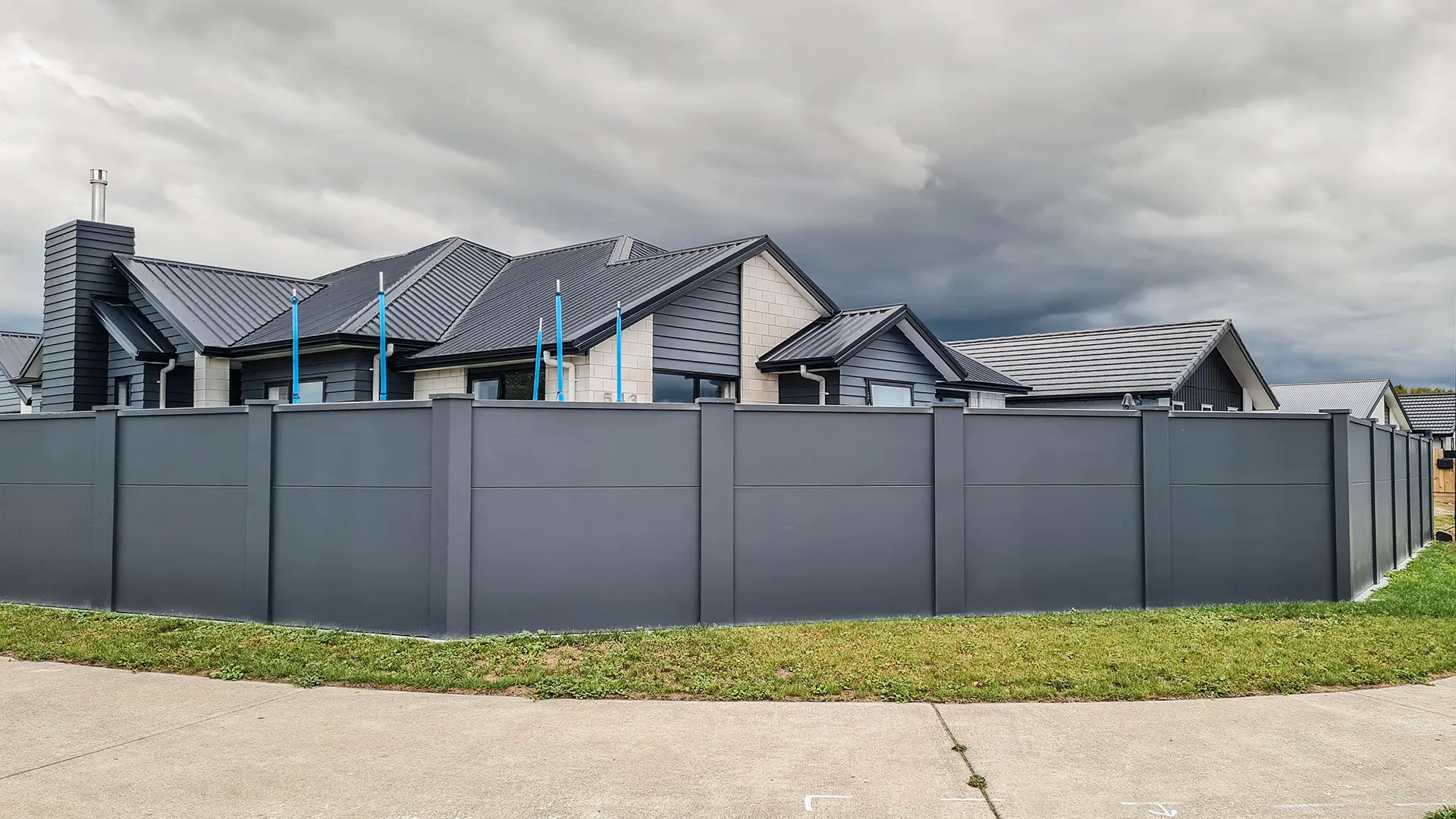
When choosing a fence, there is a lot to consider...
When choosing a fence, there is a lot to consider... In general, this would include fence heights, the length of your fence and preferred aesthetics you have in mind. Then there’s more technical details such as whether you need to step your fence up or down, while also bearing in mind the conditions of the nearby terrain around the fence, you will have to work around when installing your new fence. You need to consider the main purpose of your fence. What level of privacy would you best prefer? What are your local fencing legislations? In terms of privacy, our product range covers all aspects, from solid wall fencing to give you complete privacy or frameless glass fencing allowing you to enjoy an undistracted view. Fencing legislations mainly account for the safety of the public, meaning you will have to research this factor through, especially if building for the safety of pets or children.
Fence Heights
The most common height fence in New Zealand, would without a doubt be a 1800mm (6ft) high fence. For many years most subdivision fences have been installed at 1800mm high. it's just a good all round fence height and it works. Like many fencing suppliers, BelAire Designer fencing offers custom fence heights to sustain customer satisfaction and suit their needs. These customisations range from bespoke glass balustrades and pool fencing, up to 2100mm high slat fencing, while also offering up to 5m high acoustic fencing – covering differing widths and heights to suit the customer perfectly. Always be sure your proposed fence height measurements are exactly how you want it as we often get asked for fence extensions and there is no simple way to do it without making it look like you have added on. We do have a solution here at BelAire Fencing, though it is not cheap and you could get a whole new fence for a similar price.
Fence Regulations NZ
You can now go up to a 2500mm high fence without a consent. Any fence height above that the team here at BelAire we would suggest you contact your local council.
What is Exempt from Needing a Consent?
Constructing a 2.0m high solid panel fence along a boundary to create a secure and private back yard.
Building a 2.2m high Aluminium Slat fence in a back yard to act as a windbreak for a barbeque area.
Installing a 2.4m high noise barrier around a construction site to ensure public safety and reduce noise coming from the site.
A homeowner wants to erect a 1.8m high fence to make his yard private from the road and neighbours.
What Needs Consent?
A property owner proposes to erect a 3.2-metre-high solid panel fence around their tennis court, well clear of any boundaries. As the fence height is higher than 2.5 metres, a building consent is required.
An owner wants to build a new Aluminium Slat fence with an overall height of 2.6 metres along the rear boundary of their property. As the fence height is greater than 2.5 metres, they will need to obtain a building consent.
The owner of a residential dwelling intends to extend a 2.8 metre high BelAire feature wall alongside a neighbouring boundary. As the fence height is greater than 2.5 metres, a building consent is required.
A building owner proposes to erect a new 1.2-metre-high glass fence around a swimming pool. A building consent is required, and the fence installed before the pool is filled with water. Regular three-yearly inspections will be required from the date of the code compliance certificate.
Permeable Fencing
If you are building in a new subdivision or development, make sure you also check the developers’ fencing requirements. Often, they will have clauses in the contract restricting how far you can set the front fence from the boundary, fence heights and that the fence has to be 50% permeable. So be sure to check all these factors.
Fence Placement
Where to place your proposed fencing, where to start and stop the proposed fence and what heights. Depending on the desired purpose of your fence is, this will determine what heights you go to. For pool fencing you must install a minimum of 1200mm high, but with a boundary fence it would be best to do what suits you and your neighbours’ preferences. The differences in heights for boundary fencing would be best to take in consideration, such as if the fence is running down a driveway whether you need a lower fence height to be able to clearly see pedestrians or oncoming traffic. Also think about where the public can see in through your windows into your living or outdoor eating areas, you may want to give yourself more privacy through different fence heights, or maybe even a change of design so you can still see out, but they can't see in. BelAire has a new fence slat profile called Oblique fencing, you can install the slats in this product with an angle where you will be able to see through, without the outside being able to see in.
Stepping a fence or installing a fence on a slope
This is an area that many get caught out, when fencing down a slope, our first suggestion at BelAire is make sure you don't just come to a slope and follow the fence down on an angle, this is a big mistake and looks horrible, the best way to fence down a slope is to angle the bottom of the fence and step the top, it’s very neat and tidy. But try to even out the raking angle by making the slope as consistent as you can. before fencing the slope, do what you can to scrape the top off to make the slope a consistent angle. Once you have this you simply place 1 fence post at the top of the slope, and 1 fence post at the bottom of the slope, then measure the post height difference, once you have that measurement work out how many bays you have in between the fencing posts and divide the height difference by the number of bays of fencing you have. this will ensure you have a nice even step for every bay coming down the slope.
What privacy do you need your fence to serve?
This is worth a lot of consideration as well prior to installing your new fencing, you can go for the traditional aluminium tubular fully open fence type, where you will have full open view to everything, or you can go to semi private like our BelAire aluminium slat fencing system where you can have any gap between the slats you want, you can do a small 5mm gap or even up to a 50mm + open gap, or even more, you can vary the gap to either make it more open or more closed towards the top of the fence line.
Otherwise for full privacy you may want to look at our BelAire solid panel fencing here: https://www.belairefencing.co.nz/product-categories/solid-panel-fencing if you don't like the plain look for the full fence height consider putting in our louvre fence infill or solid slat infill. this will break up the design a little but still allow full privacy. If budget is of concern you may want to look at a cheaper alternative to the likes of a coloursteel fencing system like the frontier fencing at https://www.sectorfencing.co.nz/
There are so many ways of fencing your property it would be well worth talking to our fencing sales reps on 0800 235 2473, we will help you achieve the best outcome for your proposed new fencing development.
No items found.
Ready to upgrade your outdoor space?
Send us your project details and our team will get back to you within 2-4 days with a written quotation.